









AI Speech Analytics for Call Centers: Improving Conversations and Guiding Smarter Decisions
Every customer call carries valuable information, not just in what is said, but how it’s said. Tone, pauses, word choice, and emotion all reveal insights that traditional call monitoring often misses. As call centers handle thousands of conversations daily, manually extracting these insights becomes nearly impossible.
AI speech analytics changes this by transforming raw voice interactions into meaningful, actionable intelligence. Instead of relying on limited call samples or subjective evaluations, modern call centers can now analyze every conversation in real time. The result is better customer experiences, more informed decision-making, and a deeper understanding of both customer needs and agent performance.
What AI Speech Analytics Means for Modern Call Centers
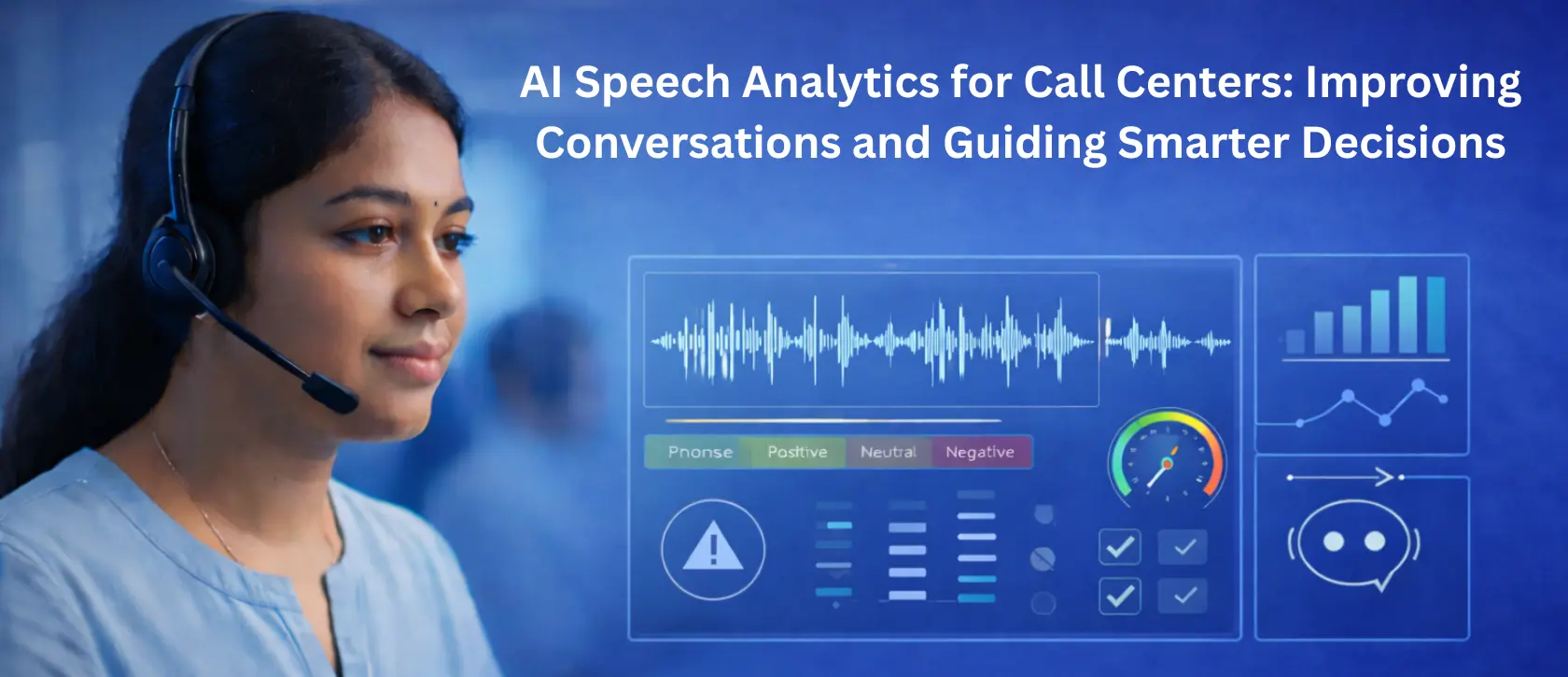
Speech analytics AI uses technologies like speech recognition, natural language processing (NLP), and machine learning to analyze recorded or live customer conversations. It goes beyond simple transcription by interpreting sentiment, intent, emotion, and conversational patterns.
For modern call centers, this means conversations are no longer fleeting moments; they become structured data that can improve service quality, ensure compliance, optimize agent performance, and guide strategic business decisions. Speech analytics AI helps contact centers move from reactive problem-solving to proactive experience management.
10 Ways AI Speech Analytics Improves Call Center Operations
1. Detecting Customer Sentiment During Live Calls
AI-poweredAI powered speech analytics can identify emotional cues such as frustration, confusion, urgency, or satisfaction as a call unfolds. By analyzing tone, pace, and word choice, the system provides real-time sentiment insights. This allows agents or supervisors to adjust their approach instantly, de-escalate tense situations, and respond with greater empathy, improving outcomes before issues worsen.
2. Identifying Call Trends and Recurring Issues
By analyzing thousands of conversations at scale, AI reveals recurring themes such as frequent complaints, product issues, or service gaps. These trends might otherwise go unnoticed through manual reviews. Call center leaders can use these insights to fix root problems, update processes, or improve products, reducing future call volumes and customer dissatisfaction.
3. Improving Agent Responses With Real-Time Alerts
During live calls, AI can prompt agents with helpful suggestions, reminders, or warnings. For example, it may flag when an agent misses a required disclosure or suggest a relevant solution based on the customer’s issue. These real-time alerts help agents stay accurate, confident, and compliant while maintaining natural conversations.
4. Strengthening Compliance for Regulated Workflows
In industries like finance, healthcare, and insurance, compliance is critical. AI speech analytics continuously monitors conversations to ensure required statements are delivered correctly and prohibited language is avoided. This automated oversight reduces regulatory risk, minimizes human error, and creates detailed audit trails without adding extra workload for agents or supervisors.
5. Enhancing Quality Audits With Full Call Coverage
Traditional quality assurance teams review only a small percentage of calls due to time constraints. AI speech analytics enables 100% call monitoring, evaluating every interaction for quality, tone, and adherence to guidelines. This provides a more accurate and fair assessment of agent performance while eliminating sampling bias.
6. Accelerating Decision-Making With Clear, Actionable Insights
Instead of sifting through lengthy reports or recordings, managers receive dashboards highlighting key metrics, sentiment shifts, and emerging risks. These insights allow leadership teams to make faster, more informed decisions, whether adjusting staffing levels, refining scripts, or improving customer journeys.
7. Reducing Escalations by Understanding Pain Points Early
AI identifies patterns that often lead to escalations, such as repeated complaints, spikes in negative sentiment, or unresolved issues. By addressing these pain points early – either during the call or through process improvements-, call centers can reduce escalation rates, improve first-call resolution, and enhance customer trust.
8. Supporting Targeted Training & Coaching Programs
Call center speech analytics pinpoints specific skill gaps across agents, such as poor objection handling, lack of empathy, or inconsistent compliance language. Training programs can then be tailored based on real data rather than assumptions. This targeted coaching leads to faster skill development and more confident, capable agents.
9. Increasing Customer Satisfaction Through Personalized Interactions
By understanding customer intent, preferences, and emotional state, AI helps agents deliver more personalized conversations. Customers feel heard and understood rather than processed through scripts. This personalization strengthens relationships, improves satisfaction scores, and increases long-term loyalty.
10. Boosting Workforce Productivity With Data-Led Planning
Speech analytics insights help forecast call drivers, peak issues, and customer behavior trends. Workforce planners can use this data to optimize staffing, reduce agent burnout, and improve scheduling accuracy. Over time, this leads to more efficient operations, higher productivity, and better employee morale.
AI speech analytics is redefining how call centers listen, learn, and act. By turning conversations into intelligence, it empowers organizations to improve customer experiences, support agents more effectively, and make smarter operational decisions.
Rather than replacing human judgment, speech analytics enhances it, providing clarity, consistency, and insight at scale. As customer expectations continue to rise, call centers that leverage AI-driven conversation intelligence will be better positioned to deliver meaningful, responsive, and trustworthy interactions in an increasingly competitive landscape.